
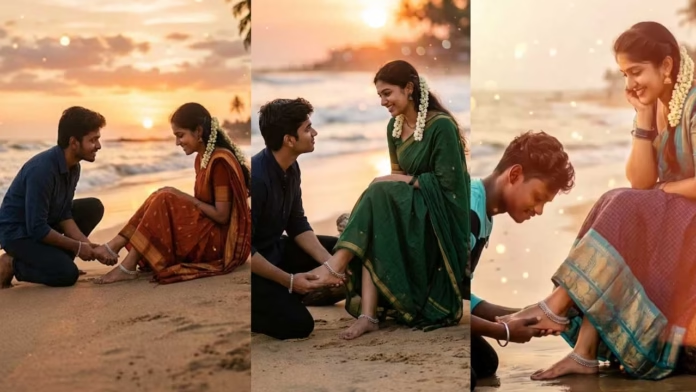
Introduction about Crafting a Cinematic Beach Scene Using AI
The emotion in this scene comes mostly from the light. It is not carried by the subjects or even by the pose, but by that soft golden rim where the sunlight gently touches the skin and fabric. Anyone who has tried to create a scene like this knows the real challenge is not simply placing two people on a beach. The difficult part is capturing that still moment—that quiet, almost shy tenderness—without making the image feel staged or overly dramatic. What makes this scene successful is its restraint. Nothing feels forced or attention-seeking. Every detail works quietly in support of one clear emotional moment.
Why the Gesture Matters More Than the Setting
A man kneeling while holding a woman’s foot carries a very specific emotional meaning. It does not feel grand or showy. Instead, it feels quiet, intimate, and deeply personal. When I first experimented with similar compositions, I noticed that simple phrases like “holding her foot” often produced stiff or unnatural poses. The real improvement came when I added language that explained the intention behind the action, such as “gently” and “with care and affection.”
These words do more than describe the movement. They shape the entire body language. The shoulders become softer, the hands feel more relaxed, and the pose begins to look natural rather than forced. Without that emotional direction, the scene can easily turn into a staged photoshoot instead of a genuine, lived-in moment.
The Subtle Power of Cultural Anchors
The saree and jasmine flowers are not just visual details. They help ground the entire scene. Without them, the image can easily become a generic “couple on a beach” concept. The jasmine flowers are especially important. In repeated generations, they seemed to improve the way the hair was rendered by adding more volume, shape, and a stronger sense of intentional styling.
It feels as though the model reads jasmine flowers as more than just an accessory. They become a signal of cultural context, and that context helps stabilize the whole composition. The saree adds another layer by creating movement and softness. Its drape brings natural curves, folds, and flow, which create a beautiful contrast against the straight, calm horizon of the ocean.
Hard vs Soft: The Bracelet Detail
The simple metallic bracelet may look like a small detail, but it has an important visual purpose. In a scene filled with soft textures like sand, fabric, skin, and water, there needs to be one element that adds a slight sense of hardness. During testing, removing the bracelet made the image feel too smooth and almost artificial. When it was added back, it created a subtle but noticeable contrast. The light interacts with it differently, reflecting off the surface instead of being absorbed. That small visual break helps define the man’s presence and keeps the overall image from feeling flat or monotonous.
Controlling Focus Without Saying “Focus”
“Shallow depth of field” is often used casually, but its real effect is emotional and psychological. Without it, the ocean waves can become too sharp and distracting. They begin to compete with the couple instead of supporting the scene. Once the background becomes softer, the mood changes. The waves are no longer a separate subject; they become part of the feeling.
They turn into gentle movement without too much detail, reflecting the quiet emotional tension of the moment. Instead of simply seeing a beach, you begin to feel the atmosphere surrounding the couple.
The Role of Imperfect Emotion
The “shy smile” carries a lot of emotional weight in this scene. If it becomes too strong or too confident, the whole mood changes. The moment no longer feels private or intimate; it starts to look posed and performative. I’ve noticed that using emotional descriptions like “shy” or “softly smiling” helps make the face feel more natural.
These words often create a slight unevenness in the expression, which makes it feel more human. That subtle imperfection adds believability to the moment. Without it, the face can easily become too polished, almost like a stock-photo expression.
Light as a Narrative Device
Golden hour is not only about warm color. Its real power comes from the direction of the light. The light should feel as if it is gently touching the subjects, not simply brightening the scene. When described well, the model usually places the sun low, either behind the couple or slightly to the side, creating a soft rim-light effect.
This edge lighting separates the couple from the background without using harsh contrast. It is subtle, but it shapes the figures in a way that feels cinematic and natural rather than artificial.
The floating bokeh particles add another emotional layer, but they need to stay controlled. If there are too many, the scene starts to feel like fantasy. When used lightly, they feel more like tiny dust particles catching the sunlight—almost invisible, but still powerful enough to enhance the mood.
When Everything Starts to Click
There comes a point during the editing and iteration process when the image no longer feels like a generated composition. Instead, it starts to feel like a memory. That is when the balance is working. No single detail is trying to stand out, but every element is quietly supporting the same emotional moment.
When Clothing Stops Being Costume
One small change that made the image feel more realistic was treating clothing as part of the scene’s behavior, not just as decoration. A simple dark outfit on the man keeps it from competing visually with the saree. More importantly, it helps control the lighting. Dark fabric absorbs the golden tones instead of reflecting them too strongly, which keeps the focus on the skin, gesture, and emotional connection.
If the outfit becomes too colorful or detailed, the scene starts to feel visually scattered. The viewer’s eye begins moving from one element to another instead of settling on the quiet connection between the two people.