
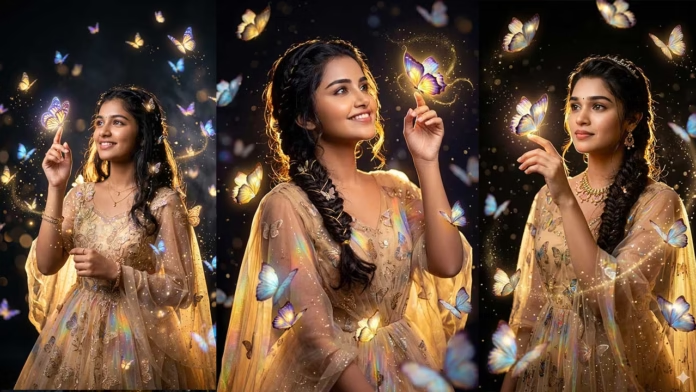
Introduction about Butterfly AI Portrait Generation
Portraits have always meant more than just showing a person’s face. They carry identity, memory, and cultural meaning. In the age of generative AI, this becomes even more important because images are no longer only captured by a camera; they are carefully created through pixels and prompts. When creating South Indian subjects, the work needs extra care because facial features, skin tone, and visual style are closely connected to regional authenticity. Turning this identity into a fantasy-style image with butterfly elements requires more than creativity. It needs a careful and well-structured approach to AI image generation.
Deconstructing the Prompt as a System Design Artifact
The given prompt is not just simple descriptive text. It works like a structured input that guides different layers of visual creation. Each part, such as identity preservation, background design, lighting, and style improvement, plays its own role in controlling the final image. In professional use, this connects with Enterprise Prompt Management, where prompts are saved, reviewed, and improved to get consistent results. The instruction to preserve the exact identity becomes the main rule, making sure every visual change stays within clear and accurate facial boundaries.
Midjourney v6 and the Art of Interpretive Rendering
Midjourney v6 is strong at turning abstract ideas into visually attractive images. It understands emotional words like “dreamy” and “peaceful” and changes them into balanced lighting, colors, and overall mood. However, this creative freedom can sometimes affect facial accuracy. To keep the person’s identity clear, reference images should be closely connected with the prompt, and style strength should be adjusted carefully to avoid making the face look too stylized. The system works less like a fixed machine and more like a guided creative assistant.
Stable Diffusion XL as a Controlled Identity Engine
For workflows that need higher precision, Stable Diffusion XL offers a more controlled creative environment. With tools like ControlNet and IP-Adapter, creators can keep the facial structure stable while changing the background, lighting, and other visual elements separately. This separation is important for keeping identity consistent across different versions of the image. Token optimization also becomes very important because overly detailed prompts can reduce the strength of identity signals. A balanced prompt helps keep facial accuracy as the main priority.
Adobe Firefly and the Layered Editing Paradigm
Adobe Firefly offers a modular editing approach that makes generative workflows more flexible. Instead of recreating the whole image, creators can improve specific parts, such as butterflies or costume details, using Generative Fill. This saves processing effort while helping preserve identity accuracy. Firefly also supports C2PA Metadata Embedding for Authenticity, allowing creators to add verifiable origin details to generated content, which is important for professional and commercial use.
The Science Behind Cinematic Lighting Design
The lighting setup in the prompt is based on real photography techniques. Rim lighting, placed behind the subject, creates a soft glowing edge that separates the person from a dark background. This effect becomes stronger in high-contrast scenes. A soft front light supports it by brightening the facial features, keeping the face clear while still giving the image a cinematic glow. Together, these lighting methods add depth without reducing important identity details.
Simulating Optical Depth in Generative Systems
Depth of field is very important for creating a realistic portrait. The prompt’s mention of shallow focus copies the look of professional portrait lenses, where the subject stays sharp and the background becomes softly blurred. Generative AI models recreate this effect through learned blur patterns, helping separate the subject from the surroundings in a natural way. This makes the final image feel more immersive, polished, and professional.
Managing Visual Hierarchy in Complex Scenes
The use of butterflies and glowing particle effects adds more visual depth, but these details need to be controlled carefully. They support the fantasy style, but they should not take attention away from the main subject. A well-written prompt keeps these elements in the background, helping guide the viewer’s focus toward the face while still making the full image look richer. Keeping this balance is important for creating a clear, powerful, and well-composed result.
Field Insights: Addressing Dataset Bias and Feature Drift
Real-world testing shows a common problem: generative AI models can sometimes change ethnic features unintentionally because of training data bias. This may lead to small changes in facial shape, complexion, or overall appearance. To reduce this risk, prompts should include clear identity details such as “South Indian facial features” and “natural brown skin tone.” Negative prompts can also help remove unwanted changes. In professional systems, this is often handled through prompt security and quality control methods to keep the final output accurate and consistent.
Enhancing Resolution Through Intelligent Upscaling
After creating the base image, advanced upscaling is needed to reach professional quality. Tools like Topaz Photo AI and Magnific AI can improve fine details such as skin texture, fabric patterns, and lighting softness. This step turns a normal AI output into a high-resolution 4K image suitable for professional use, making sure the final visual quality matches the original creative idea.
Observability and Performance Tracking in Generative Pipelines
Modern AI workflows depend on clear performance tracking. LLM Observability systems help monitor how different prompt versions affect image quality, identity accuracy, and style consistency. This allows teams to improve prompts in a more organized way and get reliable results across multiple generations. It turns prompt engineering from simple trial and error into a structured, repeatable process.
Related to this post : TinyVerse Portraits